Surf Tips and News
How 2026 Wetsuit Durability Conversations Are Shaping Buying Behavior: Care, Repair, and When to Replace
In 2026, wetsuit durability conversations are shaping buying behavior in a way that goes far beyond simple price comparisons, and the numbers back it up: proper rinsing and drying routines alone can extend a wetsuit’s lifespan to 5 years, compared to the 1-3 year average that most surfers experience with basic care. Whether you book Surf Lessons Lahnich at a local spot like ours or you’re a seasoned cold-water regular, understanding how to care for, repair, and eventually replace your wetsuit is now one of the most important decisions you make as a surfer.
Key Takeaways
| Question | Answer |
|---|---|
| How long does a wetsuit last in 2026? | With proper care, 4-5 years. With basic care, typically 1-3 years. |
| What is the most important care step for wetsuit longevity? | Rinsing thoroughly in fresh water after every surf session and allowing it to dry flat or on a wide hanger out of direct sunlight. |
| Can a wetsuit be repaired instead of replaced? | Yes. Small tears and seam splits are repairable with neoprene glue or brand repair programs. Major delamination or a complete loss of thermal performance signals replacement. |
| What wetsuit features improve long-term durability? | Glued and blind-stitched (GBS) seams, taped construction, premium neoprene blends like Ultra Flex or TechnoButter, and reinforced knee panels. |
| Does buying a more expensive wetsuit mean better durability? | Generally yes, because higher-end suits use better seam construction and neoprene, but consistent care matters more than price alone. |
| Where can I buy a durable wetsuit in Lahinch? | We stock a full range of O’Neill and Rip Curl wetsuits at Ben’s Surf Clinic Lahinch, from entry-level to premium performance suits. |
| When is the right time to replace a wetsuit? | When the neoprene feels thin and flushing with cold water regularly, seams are splitting beyond repair, or the suit no longer holds its shape. |
Why 2026 Wetsuit Durability Conversations Are Changing How Surfers Buy
The conversation around wetsuit durability in 2026 has shifted from “which suit looks best” to “which suit lasts longest and how do I maintain it.” Surfers today are asking smarter questions before they buy, and those questions are directly influencing the features brands are prioritising in new designs.
At our Surf School Lahinch, we see this shift firsthand every season. Customers are no longer just asking about warmth ratings; they want to know about seam construction, neoprene type, and whether the suit can be repaired if it tears.
This buying behaviour change is meaningful for both consumers and brands. Manufacturers are now competing on durability claims, warranty lengths, and repair programmes just as much as they compete on flexibility or thermal performance.
This infographic highlights the five durability factors shaping wetsuit purchases in 2026, including care routines, repair options, and when to replace.
The Real Cost of Neglecting Wetsuit Care in 2026
Most surfers underestimate how dramatically their daily habits affect wetsuit lifespan. The biggest mistake we see at Surf Lessons Lahnich sessions is surfers rinsing their suit in the carpark shower for 10 seconds and then bunching it into a bag.
Salt, UV exposure, chlorine, and improper storage are the four main enemies of neoprene. Each of these breaks down the rubber’s elasticity over time, causing it to lose thermal performance and eventually crack or delaminate.
Here is what a proper care routine looks like in 2026:
- Rinse thoroughly in fresh water after every single session, inside and out
- Dry inside out first, then flip and dry the outside away from direct sunlight
- Use a wide, padded hanger (never a thin wire hanger that creases the shoulders)
- Store flat or loosely rolled in a cool, dry place during the off-season
- Avoid folding at the waist for extended periods, as this cracks the neoprene at the crease
- Use a dedicated wetsuit shampoo or conditioner every few weeks to maintain neoprene suppleness
- Never leave a wetsuit in a hot car boot or in direct sunlight for any extended period
These steps are the single biggest factor in whether your wetsuit lasts two years or five. We make a point of covering this at every Surf School Lahinch session we run, because a well-cared-for suit keeps you warmer and performs better in the water.
How 2026 Wetsuit Durability Features Are Directly Shaping Buying Behavior
The construction details that used to be buried in product spec sheets are now the first things informed buyers look at. In 2026, wetsuit durability conversations are shaping buying behavior because consumers have learned the language of construction quality and they use it to filter their options.
The key durability features to understand before purchasing are:
- Glued and Blind-Stitched (GBS) seams: The needle never fully penetrates the neoprene, so there are no holes for water to flush through. This is the minimum seam standard for any serious cold-water wetsuit.
- Taped seams: An additional layer of flexible tape bonded to the inside of seams for extra strength and water resistance. Found on suits like the Rip Curl Dawn Patrol 5/4 Hooded (EUR 300) with its 3/4 taping system.
- Premium neoprene blends: O’Neill’s Ultra Flex neoprene stretches further and recovers its shape better than standard limestone-based neoprene, directly extending the suit’s useful life.
- Reinforced knee panels: A durability indicator that premium brands include to handle the high-wear area on the knees during paddling and pop-ups.
- Liquid seam welding: Completely removes external stitch lines in favour of bonded seams, providing a smoother, more durable seal.
Wetsuit Repair in 2026: When to Fix Instead of Replace
One of the most significant trends driving 2026 wetsuit durability conversations is the rise of repair culture. Both consumers and brands are embracing the idea that a small tear or split seam is not automatically a reason to buy a new suit.
Brands like Rip Curl and Patagonia have invested heavily in repair infrastructure. Patagonia reports a repair success rate of approximately 90%, using data from 5,000 repaired suits to redesign high-stress zones like ankle seams in future models. This is a sign that repair programmes are no longer a novelty; they are a core part of the product lifecycle.
Here is a practical guide to deciding whether to repair or replace:
| Issue | Repair or Replace? | Recommended Action |
|---|---|---|
| Small tear (under 5cm) | Repair | Neoprene glue or patch kit |
| Split seam at knee or shoulder | Repair | Brand repair programme or neoprene cement |
| Multiple seam failures across suit | Replace | Structural integrity compromised |
| Neoprene delamination | Replace | Cannot be reliably fixed at home |
| Zip failure | Repair | Professional zip replacement |
| Loss of thermal performance | Replace | Neoprene elasticity has degraded |
When you do need professional help assessing a wetsuit, our team at Ben’s Surf Clinic is happy to take a look and give you an honest opinion on whether repair or replacement makes more sense for your situation.
Knowing When to Replace Your Wetsuit: Clear Signs in 2026
Even with the best care routine, every wetsuit reaches the end of its useful life. Dedicated surfers who are in the water 3-5 times per week typically see neoprene elasticity decrease within a few months, with most needing to replace their suit by the second year of heavy use.
For the average surfer who gets in the water once or twice a week, a well-maintained suit can last considerably longer. The key is recognising the genuine signs of wear rather than replacing out of habit or marketing pressure.
Replace your wetsuit when you notice any of the following:
- You are consistently cold in conditions that used to keep you comfortable in the same suit
- The neoprene feels thin or papery to the touch in high-wear areas
- Water flushes freely through seams even after repair attempts
- The suit is no longer flexible at the shoulders and arms, restricting your paddle
- The lining has worn away in multiple areas, exposing bare neoprene
- The suit has developed a permanent, unpleasant odour that doesn’t clear even after cleaning
- There are multiple delaminating sections across the body panels
If you are unsure and want to check conditions before deciding whether it is the suit or just a cold day, checking the Lahinch Live Cam to monitor swell and temperature conditions can help you calibrate whether your gear is actually underperforming or whether the Atlantic is just doing what it does.
Our Wetsuit Range at Surf School Lahinch: Built for Durability
At our Surf School Lahinch, we have carefully curated a wetsuit range that reflects exactly what the 2026 wetsuit durability conversation is demanding. Every suit we stock is chosen because it offers a genuine combination of construction quality, thermal performance, and realistic longevity.
Here is an overview of the key options we carry and how their durability features compare:
| Wetsuit | Price (EUR) | Key Durability Features |
|---|---|---|
| O’Neill HyperFreak Hooded | EUR 400 | TechnoButter 3 neoprene, durability-focused seams, integrated hood |
| O’Neill Epic Womens Hooded Chest Zip | EUR 305 | UltraFlex, Firewall insulation, windproof exterior |
| Rip Curl Dawn Patrol 5/4 Hooded Mens | EUR 300 | E5 neoprene, E5 Flash lining, glued and blind-stitched with 3/4 taping |
| O’Neill Ninja 4/3 Chest Zip Womens | EUR 270 | Ultra Flex neoprene, internal taped seams, water-tight neck closure |
| O’Neill Epic 6/5/4 Chest Zip | EUR 244 | Ultra Flex neoprene, LSD closure, hooded option |
| O’Neill Epic 5/4 Back Zip Womens | EUR 235 | Ultra Flex material, robust seam bonding, weather-resistant closure |
| O’Neill Epic 5/4 Back Zip Mens | EUR 235 | Premium Ultra Flex neoprene, robust seams, cold-water warmth |
| Rip Curl Dawn Patrol 5/3 Chest Zip Mens | EUR 217 | E5 neoprene, reinforced seams, 3/4 taping |
| O’Neill Reactor 5/3 Back Zip Mens | EUR 150 | Reliable durability seam construction, comfortable fit |
| Rip Curl Omega 5/3 Back Zip Mens | EUR 160-200 | Durability-focused seams, streamlined back-zip entry |
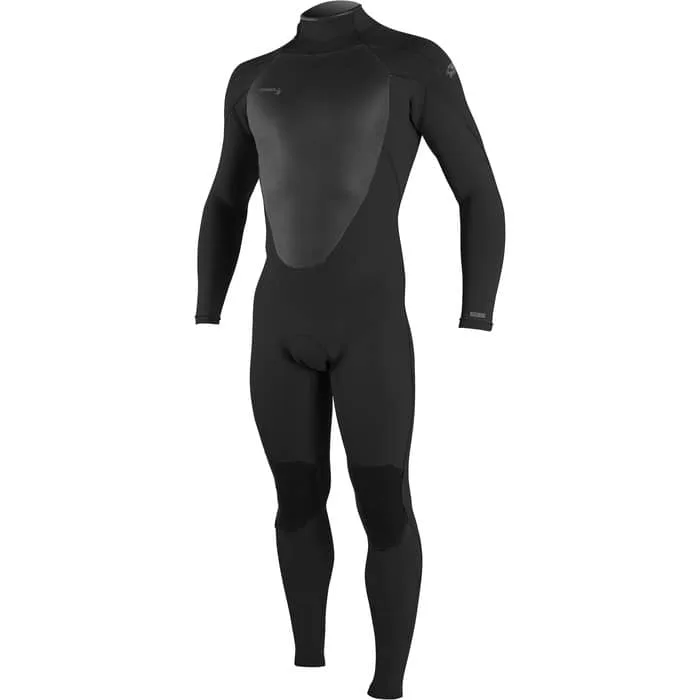
Surf Lessons Lahinch and Why Your Wetsuit Durability Choice Actually Matters
When students come to us for Surf Lessons Lahnich at our base in Lahinch, one of the first practical conversations we have is about their equipment. A wetsuit that is past its useful life doesn’t just make you cold; it genuinely limits your progress in the water.
A suit with degraded neoprene restricts your shoulder rotation, making the paddle phase of surfing more tiring than it needs to be. A suit that is flushing water isn’t just uncomfortable; it pulls your focus away from reading the wave and towards surviving the cold.
We work with students at every level, from complete beginners to surfers looking to push into more challenging conditions, and across all skill levels we see the same pattern. The surfers who invest in quality equipment and care for it properly get more out of every session. If you are watching the Lahinch Live Cam and planning your next session, it is worth thinking about whether your wetsuit is up to the conditions you are looking at.
We carry suits suitable for the full range of Atlantic conditions you will encounter here. Whether you are looking for a first proper cold-water suit or upgrading to a high-performance option, we stock the right gear at our Surf School Lahinch shop.
Eco-Conscious Materials and the Future of Wetsuit Longevity in 2026
The 2026 wetsuit durability conversation isn’t limited to how long a suit lasts. It now also includes how responsibly it degrades when it reaches the end of its life.
New natural rubber alternatives like ‘Ocena’ rubber, used by brands including Rip Curl and O’Neill, are 82% bio-based. This addresses growing consumer concern about traditional petroleum-derived neoprene and its environmental footprint.
From a durability standpoint, this matters because bio-based rubbers are now matching or exceeding the performance of traditional neoprene in high-quality production environments. When you buy a suit from our range at Ben’s Surf Clinic, you are increasingly buying into materials science that is improving both the suit’s lifespan and its end-of-life story.
Billabong has also moved to offer a 2-year limited warranty on all seams, materials, and liquid-welded construction across its range, a direct response to consumer pressure around premature wear. Warranty coverage is now something buyers actively compare before making a purchase decision.
Using the Lahinch Live Cam to Inform Your Gear Choices
One practical tool that connects directly to the wetsuit durability conversation is the Lahinch Live Cam. Checking live conditions before a session allows you to match your wetsuit choice to actual water temperature and swell size rather than guessing.
This matters for durability because repeatedly using a suit in conditions it was not designed for accelerates wear. A 4/3 suit regularly pushed into mid-winter Atlantic swells will degrade faster than the same suit used in appropriate seasonal conditions.
We recommend using the Lahinch Live Cam alongside an O’Neill temperature guide to make sure you are always pairing the right suit thickness with the right conditions. This habit extends your suit’s life and keeps your sessions more productive. Whether you are coming in for Surf Lessons Lahnich or heading out independently, the live cam is a resource worth bookmarking.
Conclusion: 2026 Wetsuit Durability Conversations Are Here to Stay
In 2026, wetsuit durability conversations are shaping buying behavior because surfers are making smarter, more informed decisions about one of the most important pieces of equipment they own. Care, repair, and knowing when to replace are no longer afterthoughts; they are central to the purchase decision itself.
The data is clear. A well-maintained suit can double or triple its useful lifespan compared to a neglected one. Brands are responding with better construction, formal repair programmes, and meaningful warranties. And surfers who understand what to look for in seam construction and neoprene quality are getting far better value from every purchase they make.
At our Surf School Lahinch, we see this shift playing out in every conversation we have with students and customers. Whether you are browsing our wetsuit range, checking the Lahinch Live Cam before your session, or coming in for Surf Lessons Lahinch, we are here to help you make the right call on wetsuit care, repair, and replacement. Visit Ben’s Surf Clinic and talk to our team about finding a suit that will go the distance.
Frequently Asked Questions
How long does a wetsuit actually last in 2026 with proper care?
With consistent fresh-water rinsing, flat drying, and proper storage, a wetsuit in 2026 can last up to 5 years even with regular use. Without proper care, the average lifespan drops to 1-3 years. The construction quality of the suit, particularly the seam type and neoprene grade, also significantly affects how long it lasts.
Is it worth repairing a wetsuit or should I just buy a new one?
In 2026, repair is absolutely worth considering for isolated tears, split seams, or zip failures. Small repairs with neoprene glue or through a brand repair programme can extend a suit’s life by another season or two. Replacement makes more sense when neoprene has lost its thermal properties throughout the suit or when multiple seams are failing simultaneously.
What are the best wetsuit brands for durability in 2026?
O’Neill and Rip Curl both offer strong durability track records in 2026, with construction features like glued and blind-stitched seams, Ultra Flex neoprene, and taping systems across their ranges. The O’Neill Epic and HyperFreak lines and the Rip Curl Dawn Patrol range are consistently well-regarded for long-term performance.
How do I know when my wetsuit needs replacing rather than repairing?
The clearest signs are consistent cold flushes through the suit in conditions where you previously stayed warm, visible neoprene thinning or delamination across multiple body panels, and a loss of stretch and shoulder flexibility that restricts paddling. If you are experiencing these issues, no amount of repair will restore the suit’s thermal performance, and replacement is the right call.
Does 2026 wetsuit care really affect how it performs in the water?
Yes, directly and significantly. Salt degradation, UV damage, and compressed storage all reduce neoprene elasticity and seam integrity, which means a poorly maintained suit flushes more cold water and restricts your movement more than a well-cared-for one. The 2026 wetsuit durability conversation is so prominent precisely because these care habits have a measurable impact on in-water performance.
What wetsuit thickness do I need for surfing in Lahinch year-round?
For year-round surfing at Lahinch, most surfers need a 5/4 or 5/3mm suit for the colder months and a 3/2mm for summer. A 6/5/4mm hooded suit like the O’Neill Epic 6/5/4 is the right choice for deepest winter conditions. Checking the Lahinch Live Cam and water temperature readings will help you confirm which thickness to reach for.
Are more expensive wetsuits actually more durable than budget options?
Generally yes, because premium wetsuits use higher-grade neoprene blends that maintain elasticity longer and seam constructions like fully taped GBS seams that resist water ingress for more sessions. The O’Neill HyperFreak at EUR 400 uses TechnoButter 3 neoprene, which provides measurably longer-lasting stretch compared to the standard neoprene in budget alternatives. That said, care habits matter enormously regardless of the price point.