Surf Tips and News
Top 10 Common Mistakes New Surfers Make in the Water (And How to Fix Them)
If you’re just starting out, understanding the top 10 common mistakes new surfers make in the water is one of the most important things you can do before you ever touch a board. In fact, research published on PubMed found that 55% of surfing injuries resulted from contact with the surfer’s own board, which means many of those injuries were preventable with better technique and awareness from day one.
Key Takeaways
| Mistake | Why It Matters |
|---|---|
| Skipping surf lessons | Qualified instruction fast-tracks safety and technique |
| Wrong board choice | Too-small boards make learning significantly harder |
| Poor paddling form | Leads to fatigue and missed waves early in a session |
| Ignoring wave etiquette | Causes collisions and conflicts in the lineup |
| Wrong wetsuit thickness | Cold water kills confidence and shortens sessions |
| Not checking conditions | Paddling out in unsuitable surf leads to danger |
| Falling incorrectly | Board contact is the #1 cause of surfing injuries |
At Ben’s Surf Clinic, we see these mistakes every single season from brand new surfers who could have had a much better time in the water with a little upfront knowledge. We’ve put this guide together to help you skip the steep learning curve and make the most of every session.
Whether you’re heading to Lahinch for the first time or have already had a few frustrating sessions, this guide covers everything you need to know. We’ll also weave in some practical resources along the way, including where to book Surf Lessons Lahinch and how to read ocean conditions before you paddle out.
Mistake #1: Paddling Out Without Checking Safety First
One of the most dangerous mistakes new surfers make in the water is heading straight into the surf without assessing the conditions. Rip currents, shallow sandbars, and overhead wave sets can catch a beginner completely off guard.
Always spend at least 10 minutes watching the water from the shore before you go in. Look for where other experienced surfers are paddling out, identify any channels, and spot any rip currents moving through the lineup.
Mistake #2: Using a Board That’s Far Too Small
New surfers consistently pick boards that look cool rather than boards that work for their skill level. A shortboard is one of the hardest surfboards to learn on, and choosing one too early is one of the top mistakes new surfers make that slows their progress dramatically.
A beginner should start on a longboard or a mid-length fun board with plenty of volume. More foam means more stability, more waves caught, and more confidence built early.
The TORQ 9ft Longboard (EUR 650) is an excellent example of a board designed specifically for progression. It’s durable, stable, and ideal for someone who wants to catch more waves and build real confidence in the water.
The TORQ 7ft 2 Fun Board (EUR 540) is another strong option for beginners who want a versatile board that grows with them as their surfing improves.
Mistake #3: Skipping Proper Surf Lessons Lahinch
This is perhaps the single biggest mistake new surfers make. Trying to teach yourself to surf from YouTube videos is frustrating, slow, and genuinely risky. Qualified surf instructors can identify your specific faults, correct your stance, and keep you safe in the water in real time.
Our beginner surf lessons cover everything from ocean safety and reading waves to paddling technique, popping up, and basic positioning on the wave. When you take structured Surf Lessons Lahinch with qualified coaches, you progress in days what would otherwise take months of solo trial and error.
If you’re bringing younger surfers along, our kids surf lessons are specifically designed with age-appropriate coaching and equipment to make the experience safe and fun for children and teens.
Mistake #4: Poor Paddling Technique
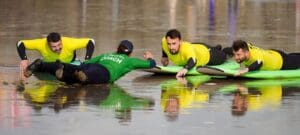
Many new surfers flail their arms through the water, burn out within 20 minutes, and miss waves because they can’t generate enough speed to catch them. Effective paddling is a skill in itself, and it’s one of the most common mistakes beginners overlook.
Your body position on the board matters enormously. Lie too far back and you’ll drag; lie too far forward and you’ll nose-dive. You should be centred on the board with your chin up, your back arched slightly, and your strokes deep and controlled alongside the rails.
Mistake #5: A Rushed or Incorrect Pop-Up
The pop-up (getting from lying to standing on the board) is the most practised movement in surfing, and it’s one of the top mistakes new surfers make when they rush it or get the mechanics wrong. A slow, two-stage pop-up often leads to losing the wave entirely. A crooked or unbalanced pop-up results in an immediate wipeout.
Practice your pop-up on dry land before you’re in the water. Place your hands flat beside your chest, push up explosively, and bring both feet up in one fluid motion. Your feet should land shoulder-width apart with your front foot angled at roughly 45 degrees to the stringer.
Mistake #6: Ignoring Wave Etiquette in the Lineup
The ocean has unwritten rules, and breaking them makes you a hazard to every other surfer around you. Paddling through the middle of someone’s wave, dropping in on a surfer already riding, or sitting in the wrong spot in the lineup are all common mistakes new surfers make that lead to collisions and confrontations.
The basic rule is simple: the surfer closest to the peak of the breaking wave has right of way. If someone is already on a wave, you do not take off. If you paddle out, you do not cut through the path of a surfer riding toward you.
Learning these rules as part of your structured sessions at our Surf School Lahinch means you’re respectful, safe, and welcome in any lineup from your very first day.
Mistake #7: Wearing the Wrong Wetsuit for the Conditions
Irish waters are cold, and underestimating that coldness is a classic mistake new surfers make. Getting into the Atlantic in a 3mm summer wetsuit when conditions call for a 5/3mm or heavier suit means you’ll be shivering and exhausted within 20 minutes, and your technique will fall apart entirely.
Choosing the right wetsuit for Lahinch conditions is non-negotiable. Here are some of the most popular options we carry in our surf shop:
- Rip Curl Dawn Patrol 5/3 Chest Zip Mens Wetsuit – EUR 270. DL Fluid Flex insulation and a tailored fit for warmth and mobility in Lahinch conditions.
- Rip Curl Dawn Patrol 5/3 Womens Wetsuit – EUR 217. Warmth and flexibility designed specifically for female surfers.
- O’Neill Ninja 4/3 Chest Zip Womens Wetsuit – EUR 270. Ultra Flex neoprene with DL Fluid Flex Firewall insulation for high-end durability and comfort.
For the coldest months, look at the O’Neill Epic 6/5/4 Chest Zip Wetsuit or the O’Neill Psycho Tech Hooded Mens Wetsuit, both designed to retain body heat even in the harshest Atlantic conditions.
If you’re heading out in colder months, gloves matter too. The O’Neill Psycho Tech 3mm Glove keeps your hands functional when the water temperature drops and helps you maintain grip on your board throughout your session.
Mistake #8: Not Using the Lahinch Live Cam to Check Conditions
One of the most avoidable mistakes new surfers make is paddling out blind. Checking the Lahinch Live Cam before you leave the car park takes 60 seconds and gives you a real-time view of wave size, wind direction, and crowd levels.
New surfers regularly overestimate their ability to handle conditions they’ve never seen before. The Lahinch Live Cam lets you make an honest assessment before you’re already in the water and committed. If the waves look too powerful, too messy, or too crowded, that information helps you make a better decision about where and when to surf.
In 2026, having access to real-time surf data is standard, and there is absolutely no excuse for heading into unknowns when the tools to check are freely available. Make the Lahinch Live Cam part of your pre-surf routine every single time.
Mistake #9: Falling the Wrong Way and Getting Hit by the Board
As that opening statistic highlighted, the most common source of surfing injuries is the surfer’s own board. This is almost always caused by falling incorrectly, whether by landing directly on the board, pushing it toward other surfers, or not protecting the head and face when wiping out.
The correct technique for falling is to go sideways and flat, like a starfish, not headfirst and not feet-first into unknown depths. Keep your arms over your head to protect your face and skull, and never dive headfirst into shallow water.
This is another area where Surf Lessons Lahinch make a real difference. Our instructors teach proper fall technique from session one, because knowing how to fall safely is just as important as knowing how to stand up.
Mistake #10: Giving Up When Progress Feels Slow
Surfing is genuinely one of the hardest sports to learn. Most beginners expect to be riding waves confidently within a day or two, and when that doesn’t happen, they get discouraged. This is one of the subtler top mistakes new surfers make, but one that cuts short a lot of potential surf careers.
Progress in surfing is not linear. Some days you’ll feel like you’ve gone backwards. That’s completely normal. The solution is consistent, structured practice combined with qualified feedback from instructors who can identify what you need to fix.
If you want to give a surfing experience as a gift, our adult surf lesson gift voucher or our private surf lesson gift voucher are excellent options that give someone the proper foundation to actually enjoy the sport rather than struggle through it alone.
Our Surf School Lahinch team has helped hundreds of beginners push through that plateau and find their feet (literally) on the board. The difference between quitting and progressing is almost always good instruction and the right equipment.
Bonus: Protecting Your Ears From Surfer’s Ear
Many beginners don’t realise that repeated cold water exposure causes a painful and progressive condition called surfer’s ear (exostosis). It’s a growth of bone in the ear canal that develops over time from cold water and wind.
Wearing ear protection from your very first session is a smart habit. The Surf Ears ear plugs we carry in store are designed specifically for surfing, keeping water out while still allowing you to hear what’s happening around you in the lineup.
Conclusion
Understanding the top 10 common mistakes new surfers make in the water gives you a genuine head start before you ever paddle out. From choosing the right board and wetsuit to learning correct fall technique and following lineup etiquette, every one of these points has a direct impact on how quickly you progress and how safe you stay.
At Ben’s Surf Clinic, we’re passionate about getting beginners into the water with the right foundations. Check the Lahinch Live Cam before each session, invest in proper Surf Lessons at our Surf School Lahinch, gear up correctly, and give yourself the patience to learn one of the most rewarding sports in the world. The ocean will still be there tomorrow. Approach it with respect, the right knowledge, and you’ll have the time of your life.
Frequently Asked Questions
What are the most common mistakes new surfers make in the water?
The top 10 common mistakes new surfers make include using the wrong board, skipping professional lessons, poor paddling technique, incorrect pop-up form, ignoring wave etiquette, not checking conditions before paddling out, wearing an unsuitable wetsuit, falling incorrectly, not protecting their ears, and giving up too soon when progress feels slow. Addressing even a few of these early on dramatically improves safety and enjoyment.
How do I know if conditions are safe for a beginner surfer?
Always check a live surf cam, such as the Lahinch Live Cam, before entering the water so you can assess wave size, wind, and crowd levels in real time. If waves are overhead, fast-breaking, or the water looks confused and messy, those are not beginner conditions, and waiting for a calmer day is the smartest choice.
Is it worth taking surf lessons as a complete beginner in 2026?
Absolutely, and this remains true in 2026. Taking structured surf lessons, such as the beginner and improver sessions at Ben’s Surf Clinic, drastically accelerates your progress and keeps you safe from day one. Trying to self-teach in the ocean without instruction leads to slower improvement and a much higher risk of injury.
What size surfboard should a beginner use?
Beginners should start on a longboard of at least 8 to 9 feet or a fun board around 7 to 8 feet with plenty of volume and width. Boards like the TORQ 9ft Longboard give beginners the stability to catch more waves and build confidence quickly. Avoid shortboards until your pop-up and wave reading are solid.
What wetsuit thickness do I need for surfing in Lahinch, Ireland?
For most of the year, you need at least a 5/3mm wetsuit for surfing in Lahinch, and during winter months a 6/5/4mm hooded suit is strongly recommended. Cold water shortens sessions and breaks down technique fast, so choosing the right wetsuit thickness is one of the most practical steps a new surfer can take.
How do I avoid getting hit by my own surfboard when I fall?
Fall flat and sideways like a starfish, keep your arms up to protect your head and face, and never dive headfirst into the water. This technique, taught as standard in our Surf Lessons Lahinch, dramatically reduces the risk of board contact injuries, which account for over half of all surfing injuries according to published research.
What is wave etiquette and why does it matter for new surfers?
Wave etiquette is the set of unwritten rules that govern who has right of way in the lineup. The key rule is that the surfer closest to the breaking peak has priority, and dropping in on someone who is already riding is both dangerous and disrespectful. Learning these rules as part of your surf school experience means you’ll be a safe and welcome presence in any lineup from day one.